Why Traditional Drug Discovery is Broken
AI Drug Development Platform – Let’s be real for a moment. The traditional way of discovering new medicines is painfully inefficient. The industry has relied on something called “high-throughput screening” for decades. In simple terms, scientists physically test hundreds of thousands — sometimes even millions — of chemical compounds against a disease target, hoping that one of them will work. It’s expensive, extremely slow, and the success rate is shockingly low.
More than 90% of drug candidates that enter clinical trials eventually fail. Some don’t work well enough, while others turn out to be toxic to humans. Because of this high failure rate, pharmaceutical companies are forced to charge extremely high prices for the few drugs that do make it to market — just to recover the massive losses from the ones that didn’t. In the end, it’s the patients who suffer the most from this broken system.
How an AI Drug Development Platform Actually Works
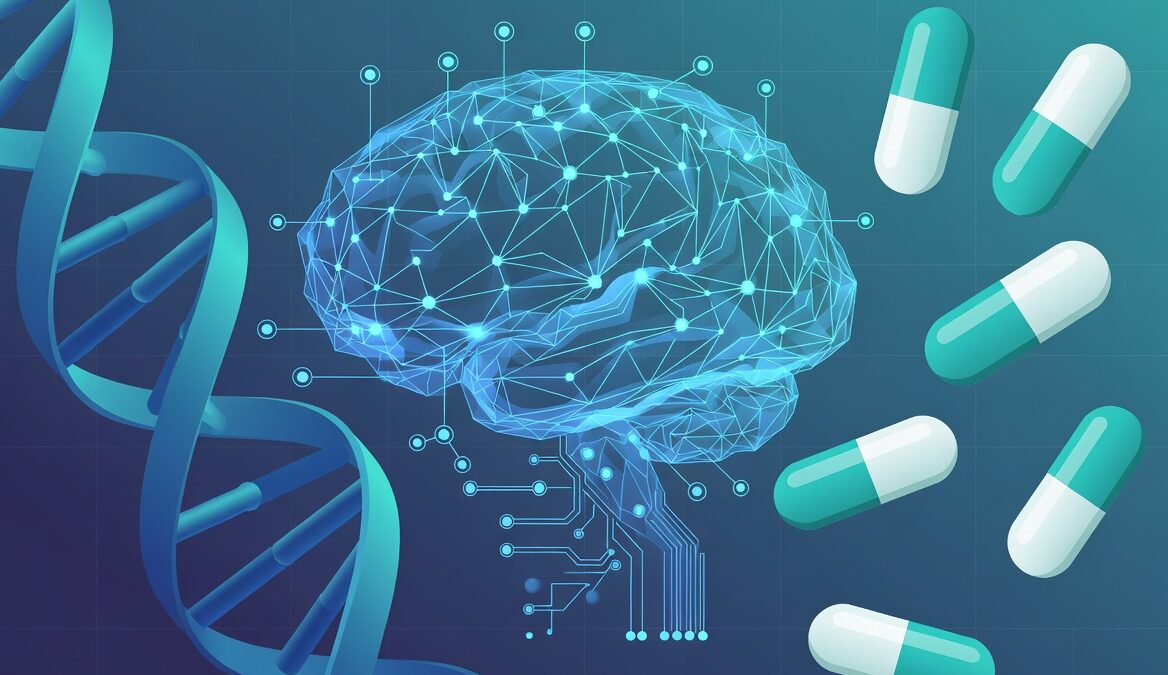
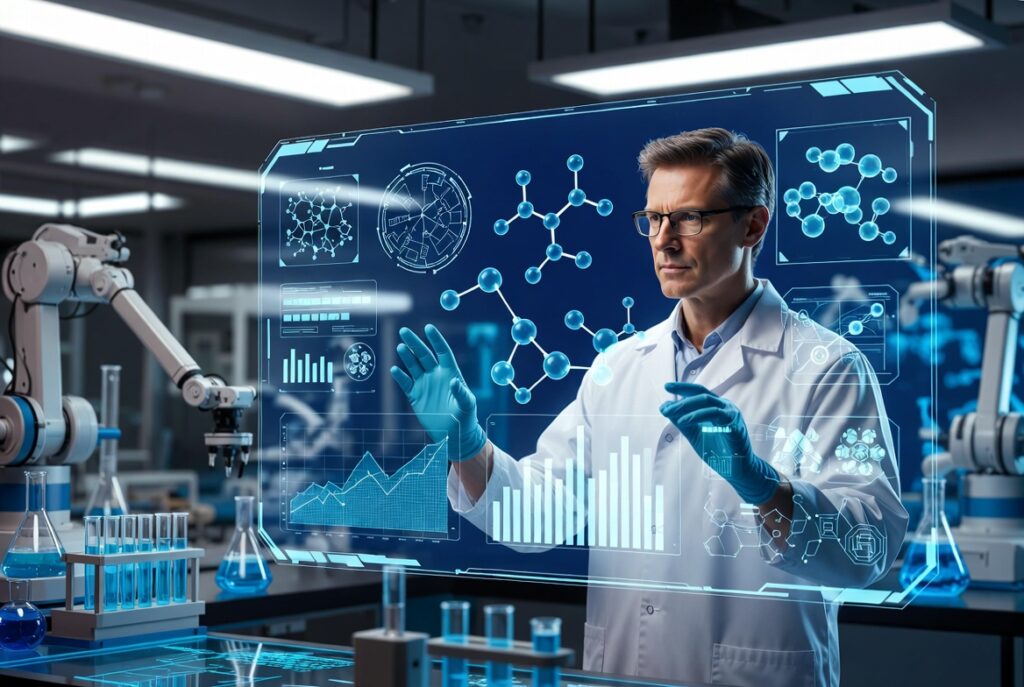
This is where artificial intelligence is starting to change the game. Instead of spending years physically testing compounds in a laboratory, scientists can now use AI platforms to simulate how molecules behave at a molecular level. These platforms act like a virtual laboratory, allowing researchers to test billions of potential compounds in a fraction of the time it would take using traditional methods.
Modern AI drug development platforms are powered by deep learning models trained on enormous amounts of data — including chemical structures, biological pathways, and past clinical trial results. The AI is capable of spotting complex patterns that would be nearly impossible for humans to detect, helping predict which molecules are most likely to become effective and safe treatments.
Virtual Screening at Massive Scale
Think about trying to find one specific sentence in thousands of books. That’s basically what traditional drug discovery used to be like. AI completely changes this process. Instead of testing compounds one by one in a lab, AI can virtually screen billions of chemical compounds within days. It quickly filters out the ones that are unlikely to work, leaving researchers with a much smaller, more promising list of candidates to test in real laboratory conditions.
Predicting How a Drug Will Behave in the Human Body
Finding a molecule that can bind to a disease target is only part of the challenge. The molecule also needs to survive inside the human body without causing serious side effects. Advanced AI models can now predict how a compound will be processed by the liver, whether it will dissolve properly, and whether it has the potential to cause heart problems or other toxicities. Catching these issues early can save years of wasted research and development.
The Core Capabilities of Modern AI Platforms
Not all AI platforms in drug development are the same. The most advanced systems go beyond just analyzing existing data — they can actually help create new possibilities.
Designing New Molecules from Scratch
Some AI platforms can now design entirely new molecules that have never existed before. This is called generative chemistry. Researchers can input specific requirements — for example, “must target this protein, must be water-soluble, and must not affect this other protein” — and the AI will generate novel molecular structures that match those criteria. This capability is opening up possibilities that were previously out of reach.
Identifying the Right Patients for Clinical Trials
One of the reasons many drugs fail in clinical trials is because they were tested on the wrong group of patients. Human biology is incredibly diverse, and what works for one person might not work for another. AI can analyze genetic and clinical data to help identify which specific patient groups are most likely to respond well to a new treatment. This improves the chances of success in clinical trials.
FAQ
What exactly is an AI drug development platform?
It’s a collection of advanced software and machine learning tools that help researchers discover, design, and evaluate potential new medicines much faster than traditional methods allow.
Can AI actually create new drugs on its own?
Not entirely by itself. AI is very good at generating ideas and predicting outcomes, but human scientists are still responsible for synthesizing the compounds, running laboratory tests, and conducting clinical trials to prove safety and effectiveness.
Will AI make medicines cheaper in the future?
In theory, yes. Because AI can significantly reduce the time and cost of early-stage drug discovery, it has the potential to lower overall development costs. However, whether this will actually translate into lower prices for patients depends on many other factors.
How much time can AI save in drug development?
Traditionally, it can take 5 to 6 years just to find a promising drug candidate. With AI, this early discovery phase can sometimes be reduced to less than a year, which can speed up the entire development process significantly.
Are AI-designed drugs safe?
Yes. Any drug, whether discovered through AI or traditional methods, must go through the same strict regulatory approval process, including multiple phases of clinical trials on humans, before it can be approved for use.
Are there already AI-designed drugs being tested on humans?
Yes. Several drug candidates designed with the help of AI are currently undergoing clinical trials for diseases such as cancer, pulmonary fibrosis, and inflammatory conditions.
Will AI replace scientists in drug research?
No. AI is a powerful tool that helps researchers work faster and smarter, but human expertise is still essential for making critical decisions, designing experiments, and interpreting complex biological results.
Final Thoughts
Artificial intelligence is not just a passing trend in pharmaceutical research — it represents a major shift in how new medicines are discovered and developed. By dramatically reducing the time and cost of finding viable drug candidates, AI has the potential to bring new treatments to patients much faster than before.
Whether you’re a researcher, an investor, or simply someone interested in the future of healthcare, this is a space worth watching closely. The platforms being developed today are already starting to influence which drugs reach clinical trials — and they will likely play an even bigger role in the medical breakthroughs of the coming years.